Aug 28, 2025 4:00 pm By Faraz Pervaiz Roshan
The story of Christians in Pakistan is stained with blood, fear, and resilience. Among countless names, one that shines with eternal defiance is that of Bishop John Joseph, who sacrificed his life in 1998 to awaken the conscience of a nation poisoned by blasphemy laws. His act was not isolated; it was deeply tied to a long chain of persecution, injustice, and false accusations. The following research brings together both historical events and my personal testimony, weaving together cases such as those of Manzoor Masih, Daniel Scott, Naimat Ahmar, Tahir Iqbal, Ayub Masih, and the lived experience of a young Christian student who himself narrowly escaped death at the hands of mullahs.
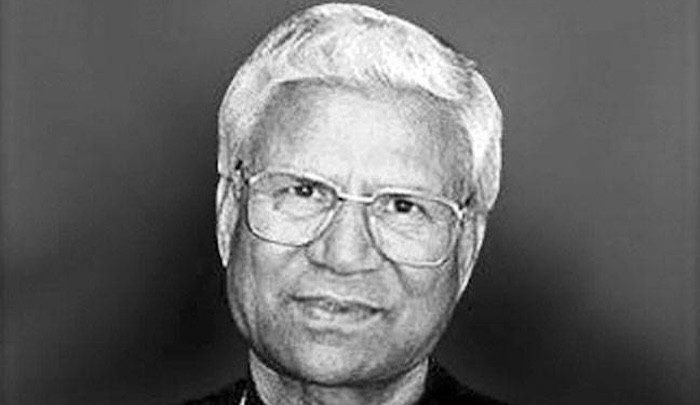
The Prophetic Kiss: Bishop John Joseph Manzoor Masih, and the Shadow of Pakistan’s Blasphemy Violence
It was a very sad and somewhat hot day of the 7th of April 1994, with the religious temperature climbing very high. It was the day of the funeral of Manzoor Masih of Gujranwala, accused of blasphemy of the prophet of Islam, who was gunned down by unknown jihadist bloodthirsty assassins two days earlier. His co-accused, Salamat Masih (a minor) and Rehmat Masih, both of them also from Gujranwala, and their common friend John Joseph of Lahore, received critical bullet injuries in the incident.
They were victims of a surprise attack of severe firing with automatic weapons by seemingly Muslim zealots who had apparently been hunting them for a long time, on the 5th of April at about 11:00 a.m. The spot of the attack was the Turner Road–Mozang Road conjunction, nearly fifty yards west of the southern gate of Lahore High Court.
Manzoor Masih received fatal injuries and breathed his last there and then. The other three were rushed to the government hospitals immediately: Salamat Masih and John Joseph to Mayo Hospital, and Rehmat Masih to Sir Ganga Ram Hospital.
They were receiving medical treatment under police guard to avoid further assassination attempts by the Muslims.
And now on the 7th of April, with tensions mounting very high, mourners from all over the country had gathered to join the funeral of Manzoor Masih, the “faithful unto death,” in the Catholic Cathedral on Lawrence Road in Lahore. The mourners included a large number of bishops, priests, nuns, politicians, social workers, leaders and activists of human rights and non-government organizations, and thousands of men and women representing many walks of life, faiths, and creeds.
At the conclusion of the funeral ceremony in the Cathedral, Bishop John Joseph conspicuously stepped forward to the coffin, kissed the feet of the dead body of Manzoor Masih, and addressing it, said, “I wish I had died in your place.”
Then, the funeral procession began its mournful march to the Christian cemetery of Jail Road, Gulberg, at 12:30 noon via Mall Road. The funeral did not raise protest slogans, but sang the Psalms of David in the Punjabi language. However, it stopped briefly for speeches before the Punjab Parliament building and the Governor’s House, without a response from either place. The procession kept moving at a mournful slow pace to its destination, and finally Manzoor Masih became “dust unto dust” at 2:30 p.m. By this time, the words of Bishop John Joseph were on every person’s lips, saying, “I wish I had died in his place.”
Bishop John Joseph’s kissing of Manzoor’s feet and his wish of dying in his place was real and symbolic at the same time. It leads at least to four conclusions.
Firstly, Bishop John Joseph, as a highly conscientious leader, had sensed the nature, seriousness, and direction of the fast-growing Islamic jihad activity in Pakistan, bearing the fruits of brutality, violence, and terrorism, nationally and internationally. He presumably sensed its far-reaching impact on Christian and non-Christian minorities, as well as on the enlightened and progressive Muslims.
Secondly, he responded to the pressure of his inner call and also to the outward imperatives to challenge the threat of the religious cleansing of the smaller and weaker communities posed by the violent jihadis in this region.
Thirdly, he inwardly vowed, inside the Cathedral, in the presence of thousands of faithful, before the coffin of a martyr, to launch a struggle to stop religious persecution more dynamically.
Fourthly, he visualized his obligatory role as a leader, or as a leader of leaders, to carry the cross of the most helpless, neglected, and oppressed communities and individuals on his shoulders.
The bishop, while kissing Manzoor’s feet and expressing his wish to have died in his place, might have had in mind the chain of tragic events of religious intolerance and persecution.