By Faraz Pervaiz
9/11-Inspired Jihad: Rally Against Faraz Pervaiz and Charlie Hebdo, Yet God Remains My Shield
Almighty God! We give You thanks and glorify Your holy and sacred name, for You have granted us the grace to bow before You through Your beloved Son, our Lord Jesus Christ—the Savior of the world, the pride of creation, and the fountain of every blessing.
O God! I am neither learned nor do I possess any merit of my own, yet through the Holy and mighty name of Your Son Jesus Christ, I plead for Your help, that You may grant deliverance and preserve the lives of innocent Christians.
Heavenly Father, I ask this prayer in the glorious and blessed name of Christ our Lord. Amen.


Introduction
The story of global terrorism in the twenty-first century cannot be told without tracing its path through Pakistan. From the burning ruins of the Twin Towers on September 11, 2001, to the night U.S. Navy SEALs stormed a compound in Abbottabad in May 2011, the footprints of Al Qaeda and its affiliates repeatedly led back to Pakistani soil. This analysis examines why Pakistan has emerged as a recurring center in the global terrorism narrative, highlighting key cases and figures that connect the country to major international attacks.
Jihad and Islamic Doctrines
The Qur’an and Sunnah repeatedly instruct Muslims to establish the dominance of Islam over the world, and, if necessary, to employ military means and armed power to achieve this goal. The followers of Muhammad were taught that the struggle for the supremacy of Islam is an essential part of their faith. This is why jihadist groups interpret these commands of the Qur’an as the basis not only for fighting against Christians and Jews but also for targeting fellow Muslims.
The Purpose of Jihad and the Qur’anic Perspective
Jihad is regarded as one of the fundamental elements of Islamic belief. It does not merely refer to spiritual struggle but also includes the necessity of military strength and preparedness. In Surah al-Tawbah (9:29), there is a clear command regarding the People of the Book Jews and Christians, instructing Muslims to fight them until they pay the jizya in a state of humiliation. Similarly, in Surah al-Anfal (8:60), Muslims are commanded to remain in constant preparation for war in order to instill fear in their enemies. This demonstrates that jihad is not restricted to Islamic preaching alone, but also encompasses combat, warfare, and the use of military force.
The Obligation and Nature of Fighting (Qital)
In Surah al-Baqarah (2:216), fighting is declared obligatory, even though it is described as something disliked, yet its outcomes are said to be beneficial. Hadith literature and early Islamic history also portray fighting not merely as a defensive act but as a practice that included killing, taking captives, seizing wealth, and destroying towns. Islamic texts present these actions as being in accordance with Allah’s will and a means to salvation in the hereafter, thus categorizing them as acts of “worship.”
Superiority of the Believers over Other Nations
The Qur’an also emphasizes the superiority of Muslims over all other communities. In Surah Aal-e-Imran (3:110), Muslims are described as the “best nation” while the People of the Book are branded as corrupt. According to this narrative, Jews and Christians are considered misguided and deviated, whereas Muslims are elevated and superior. This concept shaped a distinct Islamic identity that views Muslims as inherently dominant over others.
Islamic Extremism and the Interpretation of Jihad
Modern Islamist militant groups use these very texts to justify their actions as a “Islamic duty.” They believe that killing opponents, executing apostates, or preventing others from embracing Christianity is not only permissible but a virtuous act. For them, oppression and violence are framed as obedience to Allah and as a means of eternal salvation.
The 9/11 Connection
The September 11, 2001 terrorist attacks, which killed nearly 3,000 innocent people in the United States, were orchestrated by Khalid Sheikh Mohammed, later dubbed the “architect of 9/11.” His eventual arrest in Rawalpindi in 2003 was the first major indication of how deeply Pakistan was embedded in Al Qaeda’s survival strategy. Over the next decade, Pakistani cities and towns became central to the capture or killing of Al Qaeda’s top leadership.
Key Al Qaeda Figures Captured or Killed in Pakistan
- Khalid Sheikh Mohammed – Architect of 9/11, arrested in Rawalpindi (2003).
Ramzi bin al-Shibh – 9/11 facilitator, captured in Karachi (2002).
Abu Zubaydah – Senior operative, arrested in Faisalabad (2002).
Abu Faraj al-Libbi – Al Qaeda’s third in command, seized in Mardan (2005).
Ahmed Khalfan Ghailani – Involved in U.S. embassy bombings, caught in Gujrat (2004).
Younis al-Mauritani – Planner of European attacks, captured in Quetta (2011).
Najibullah Zazi’s contacts – New York subway plot connections traced back to Pakistan.
Osama bin Laden – Al Qaeda leader, killed in Abbottabad (2011).
By the time bin Laden was eliminated, the pattern was unmistakable. Dozens of Al Qaeda commanders and operatives tied to attacks in New York, London, Madrid, and elsewhere had found refuge in Pakistan. Whether by design or neglect, the country served as a crucial sanctuary for the world’s most dangerous militants.
Pakistan as a Hub of Jihadist Mobilization
The problem extends beyond Al Qaeda’s leadership. Pakistan has been a focal point for jihadist mobilization, particularly in moments of global controversy. When Islamist groups protest, Pakistan often becomes the stage. For example, demonstrations in Rawalpindi once demanded death for cartoonists and sought to halt European cartoon contests such as those organized by Dutch politician Geert Wilders. These pressures even led Wilders to cancel a planned event in the Netherlands.
The Charlie Hebdo Link: Zaheer Hassan Mehmood
Another case underlines
Pakistan’s recurring role in exporting violent extremism. On 25 September 2020, a Pakistani man named Zaheer Hassan Mehmood traveled to Paris and carried out a cleaver attack outside the former offices of Charlie Hebdo. Initially claiming to be “Hassan A.,” an 18-year-old from Mandi Bahauddin, he was later identified as a 25-year-old from Kotli Qazi, a known stronghold of the Jihadis Tehreek-e-Labbaik Pakistan (TLP). He brutally injured two employees of a nearby television production company. His radicalization was rooted in the same Pakistani networks that had previously mobilized thousands for protests demanding punishment for perceived blasphemy in the West.
The Rally of 11 September 2020
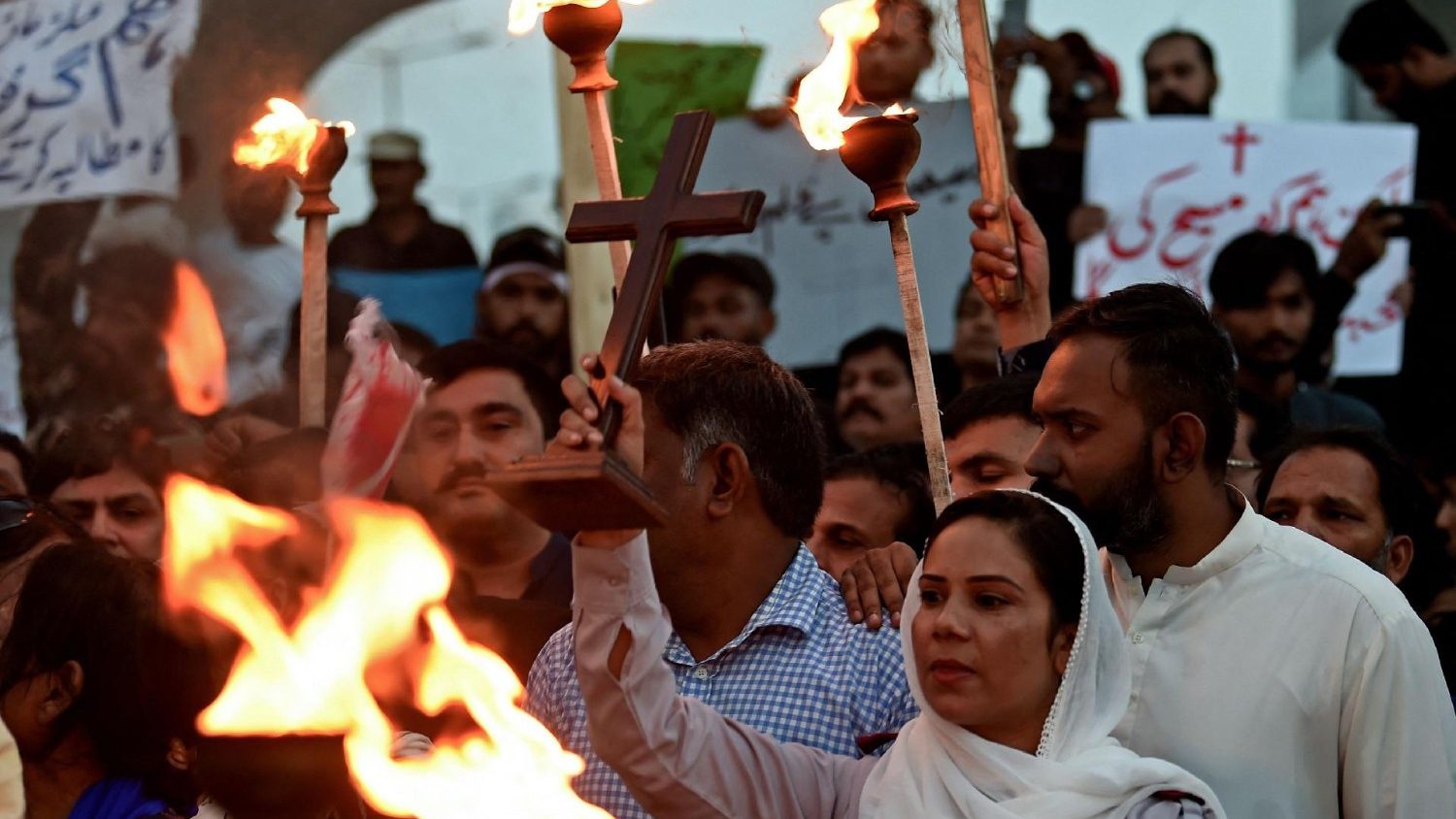
On 11 September 2020, Shaheer Sialvi, a jihadi Islamist who was then president and motivational speaker of the State Youth Parliament Pakistan, with the backing of Tehreek-e-Labbaik Pakistan (TLP), a hardline Islamist terrorist organization known for its nationwide street power, mob lynching, burning Christian houses Churches and the Holy Bible, killing Christian and violent protests against any reform of Pakistan’s draconian blasphemy laws, organized yet another rally against me, Faraz Pervaiz, and the French magazine Charlie Hebdo. The protest stretched from Rawalpindi to Islamabad, Pakistan’s capital. It was an anti-blasphemy demonstration caused by Charlie Hebdo’s republication of cartoons depicting the Prophet of Islam. Thousands of Muslim fundamentalists, mullahs, vigilantes, and jihadi leaders joined, chanting openly for my death and carrying banners with my face and name printed on them.
Their slogans were clear:
Sabiluna Sabiluna Al Jihad Al Jihad – سبيلنا سبيلنا الجهاو والجها
“Our way, our way is jihad and jihad.”
Other chants included:
“Kill Faraz Pervaiz”
“Kill Charlie Hebdo”
Choosing September 11 for this rally was no coincidence. That date is remembered as one of the darkest days in American history, when nearly 3,000 lives were lost in the World Trade Center Islamic attacks. By aligning their protest with that day, the organizers sought to maximize the emotional impact on Christians and the West, signaling how far Muslim jihadis would go to defend the so-called “honor” of Muhammad, Islam, and the false teaching of the Quran.
The consequences of this rally were soon visible. A young Pakistani jihadi named Zaheer Hassan Mehmood (initially claiming to be “Hassan A.,” aged 18 from Mandi Bahauddin, but later revealed to be 25 from Kotli Qazi, Pakistan, a TLP terrorist stronghold) traveled to Paris. On 25 September 2020, he attacked with a cleaver outside the former Charlie Hebdo offices, brutally injuring two employees of a nearby TV production company.
French prosecutor Jean-François Ricard revealed that the attacker carried bottles of flammable paint thinner, intending to burn down Charlie Hebdo’s old offices. He admitted to planning the attack as revenge for the magazine’s republication of Muhammad cartoons on 2 September 2020. Initially, he presented himself as a minor, which allowed him to enter France in 2018 under a false identity and benefit from social aid. But investigators later discovered his real name and age—Zaheer Hassan Mehmood, 25 years old. He had even filmed a video before the attack, declaring that he was avenging the Prophet of Islam.
The French government quickly labeled the stabbing as an act of Islamist terrorism. Ricard confirmed that Mehmood had no prior record with intelligence services, and he mistakenly believed that Charlie Hebdo employees still worked in the building he targeted.
This sequence of events shows a direct link between the Rawalpindi-Islamabad rally of 11 September 2020, led by Shaheer Sialvi Jihadi and TLP Terrorist Organization, and the Paris attack carried out two weeks later. The rally not only incited millions of jihadis on the streets of Pakistan but also inspired jihadis like Mehmood to commit acts of terror in Europe, demonstrating the cross-border impact of Pakistani jihadi propaganda.
Why Pakistan?
Several factors explain why global terrorism so often loops back to Pakistan:
Geopolitical Position – Bordering Afghanistan, Pakistan provided strategic depth to militant groups during the U.S.-led war on terror.
State and Non-State Entanglement – Elements of Pakistan’s security establishment have historically maintained ambiguous ties with jihadist groups for regional leverage, particularly against India and in Afghanistan.
Local Radicalization – Groups like TLP, Lashkar-e-Taiba, and Jaish-e-Mohammed foster an environment where extremist ideology thrives domestically and occasionally exports violence abroad.
Urban Sanctuaries – Cities like Karachi, Lahore, Quetta, and Rawalpindi offered anonymity and infrastructure for international militants.
Conclusion
Just think about this: the meeting of Al-Qaeda leaders took place in Pakistan, and its consequences appeared in New York City. A protest erupted in Rawalpindi, and its impact was felt in France. Why does Pakistan so often appear at the center of such events? From 9/11’s architects to attackers on European soil, the pattern is consistent: Pakistan has functioned as a central node in global jihadist networks. Whether as a base of operations, a refuge, or a launchpad for radicalized individuals, its role cannot be ignored. This persistence raises urgent questions about governance, ideology, and the ties between Pakistan’s state structures and militant actors. The global fight against terrorism cannot be understood—let alone resolved—without addressing Pakistan’s enduring connection to some of the world’s most consequential terrorist movements.